The Biological Reality of Why Dieting is So Hard
Most people who start a diet expect discipline alone to deliver results. But science shows that even the most committed individuals often struggle, not through lack of effort, but because the brain and body are wired to resist nutritional change.
From evolutionary survival systems to hormonal feedback loops and metabolic adaptation, dieting triggers powerful biological responses that undermine weight loss and favor weight regain. Understanding why dieting is so hard can help you approach nutrition with clarity and confidence, rather than frustration and blame.
Hormonal Responses
When you restrict calories, your endocrine system, the network of hormones regulating appetite and metabolism, responds aggressively.
Hunger Hormones in Overdrive
Calorie restriction increases ghrelin, the hormone that signals hunger, and decreases leptin, the hormone that signals fullness. These shifts make you feel hungrier and less satisfied by food, increasing the drive to eat, even when you “know better.”
Your Body’s Will to Conserves Energy
Dieting doesn’t just reduce food intake, it also reduces energy expenditure. The body responds to reduced energy by lowering resting metabolic rate, meaning you burn fewer calories at rest than before the diet. This metabolic adaptation persists long after weight loss and actively promotes weight regain.
Set Point & Homeostasis
Your body strives to maintain a biologically “preferred” weight range through homeostatic mechanisms known as the set point. This regulatory system, centered in the hypothalamus, adjusts hunger, metabolism, and energy use to defend your weight against change.
Survival First
From an evolutionary perspective, early humans faced food scarcity. As a result, physiology evolved to conserve energy and protect against weight loss, mechanisms that are detrimental in a modern environment of constant food availability.
When weight drops below the set point, the body interprets this as a threat, activating hunger signals, slowing metabolism, and changing nutrient utilization, all aimed at restoring the previous weight.
Brain Changes
Dieting doesn’t just influence hormones, it alters the brain’s response to food.
Reward Pathways & Food Cue Sensitivity
Restricted eating makes the brain more sensitive to high‑calorie foods and stress, increasing cravings and making high‑reward foods more appealing. Neural circuits involving dopamine and reward are engaged more intensely during dieting, reinforcing the urge to eat calorie‑dense foods.
Impaired Nutrient Sensing in Obesity
Recent research shows that in people with obesity, brain responses to nutrients are diminished, even after dieting. This blunted nutrient signaling may impair the sensation of satiety and promote overeating, demonstrating how deeply biological mechanisms influence eating behavior.
Energy Homeostasis
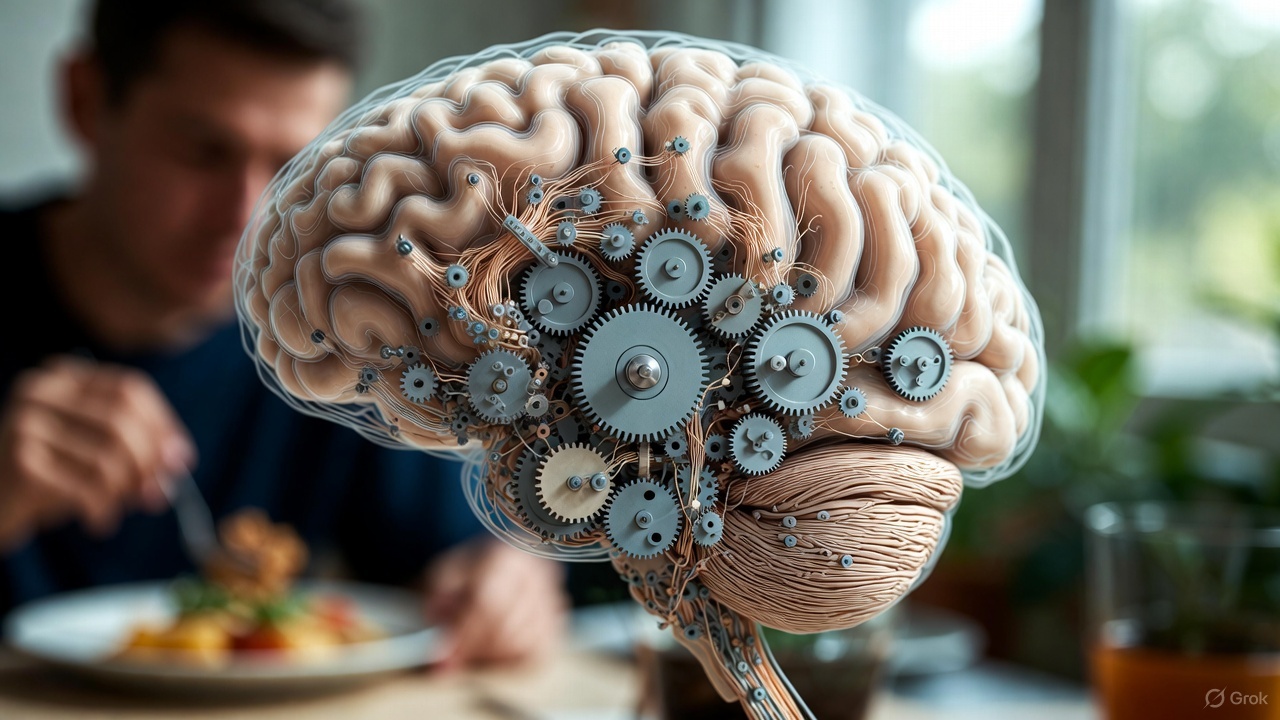
The brain does not passively accept calorie restriction. It actively regulates energy balance through a network of signals that govern hunger, satiety, and metabolism, a process known as energy homeostasis.
At the center of this system is the hypothalamus, which integrates biochemical signals from the gut, adipose tissue, and other organs to fine‑tune hunger and energy use. These complex interactions ensure that short‑term dieting triggers compensatory biological responses that resist weight change, mantaining the set point.
Why Traditional Diets Often Fail
Despite short‑term weight loss successes, scientific evidence consistently shows that most diets are not effective in the long run. Studies estimate that 80–95% of people regain lost weight within two years, and dieting histories may even predict future weight gain.
This isn’t lack of willpower, it’s biology. The body’s physiological, neurological, and hormonal systems work cohesively to counteract energy restriction and defend your biological set point.
What to do Instead
While energy homeostasis strongly resists quantitative changes like strict calorie reduction, qualitative changes, such as improving food quality, meal timing, and nutrient composition, often bypass the body’s defense systems and lead to more sustainable outcomes.
Energy Homeostasis and the Quantitative Trap
When you reduce calorie intake significantly, the body activates compensatory mechanisms: increasing hunger, reducing satiety, and slowing metabolism. These changes make long-term caloric restriction not only hard to maintain but also biologically unsustainable. Energy homeostasis is designed to detect and resist changes in caloric energy, especially when intake drops sharply.
Why the Brain Accepts Qualitative Adjustments
In contrast, improving what you eat, not just how much, often avoids triggering the same level of biological resistance. Shifting from ultra-processed, low-nutrient foods to whole, nutrient-dense options (like vegetables, lean proteins, and healthy fats) helps stabilize blood sugar, support gut-brain communication, and modulate appetite-regulating hormones. These changes can naturally lead to reduced calorie intake without intentional restriction.
For example:
- Increasing protein intake enhances satiety and thermogenesis.
- Replacing refined carbs with fiber-rich vegetables improves gut health and reduces cravings.
- Prioritizing nutrient density can lower total energy intake while improving satisfaction.
Behavioral Compliance and Psychological Resilience
Qualitative shifts also support better adherence and psychological resilience. They’re perceived as less extreme, more flexible, and less punishing than quantitative diets, making them easier to sustain long term.
Over time, these small but strategic improvements can create meaningful health outcomes, often with less resistance from the brain and body.
Conclusion: Working With Your Biology, Not Against It
Dieting is hard because dieting triggers survival‑oriented responses across the brain and body. Hormonal shifts, metabolic adaptation, neural reward mechanisms, and evolutionary programmed defenses all make straight calorie restriction a biologically uphill battle.
At empowerise, we understand that lasting nutritional change isn’t just about willpower, it’s about strategies that work with your physiology. Our coaching programs help you build sustainable habits, optimize metabolic health, and navigate biological challenges with expert guidance.
Ready to transform your relationship with food and achieve lasting health results?
Enroll in our coaching program today and start the journey toward sustainable change.
References
Andermann, T. (2023). Why most diets don’t work. LocalMD NYC. https://www.localmd.nyc/why-most-diets-dont-work
Cleveland Clinic. (2022). Set Point Theory: Why It’s So Hard to Keep Weight Off. https://health.clevelandclinic.org/set-point-theory
Morton, G. J., Meek, T. H., & Schwartz, M. W. (2014). Neurobiology of food intake in health and disease. Nature Reviews Neuroscience, 15(6), 367–378. https://pubmed.ncbi.nlm.nih.gov/24840801/
Ravussin, E., & Ryan, D. H. (2018). Energy metabolism in weight loss and weight gain. Nature Reviews Endocrinology, 14(1), 57–64. https://pmc.ncbi.nlm.nih.gov/articles/PMC5097076/
Science Magazine. (2016). Why diets fail – and how to make them work. https://www.science.org/content/article/why-diets-fail
Sumithran, P., Prendergast, L. A., Delbridge, E., et al. (2011). Long-term persistence of hormonal adaptations to weight loss. New England Journal of Medicine, 365(17), 1597–1604. https://doi.org/10.1056/NEJMoa1105816
Yale University. (2023). Diminished brain response to nutrients observed in people with obesity. https://news.yale.edu/2023/06/12/diminished-brain-response-nutrients-observed-people-obesity
National Geographic. (2020). Why most people regain weight after losing it. https://www.nationalgeographic.com/health/article/why-most-people-regain-weight
Wikipedia Contributors. (2023). Thrifty gene hypothesis. Wikipedia. https://en.wikipedia.org/wiki/Thrifty_gene_hypothesis
Wikipedia Contributors. (2023). Energy homeostasis. Wikipedia. https://en.wikipedia.org/wiki/Energy_homeostasis
PubMed Central. (2016). Ghrelin, leptin and weight regulation. https://www.ncbi.nlm.nih.gov/pmc/articles/PMC4766925
National Center for Biotechnology Information. (2022). Set Point Theory and Body Weight Regulation. https://www.ncbi.nlm.nih.gov/books/NBK592402
Lindner Center of HOPE. (2021). Why Dieting Can Be Harmful. https://lindnercenterofhope.org/blog/why-dieting-can-be-harmful